
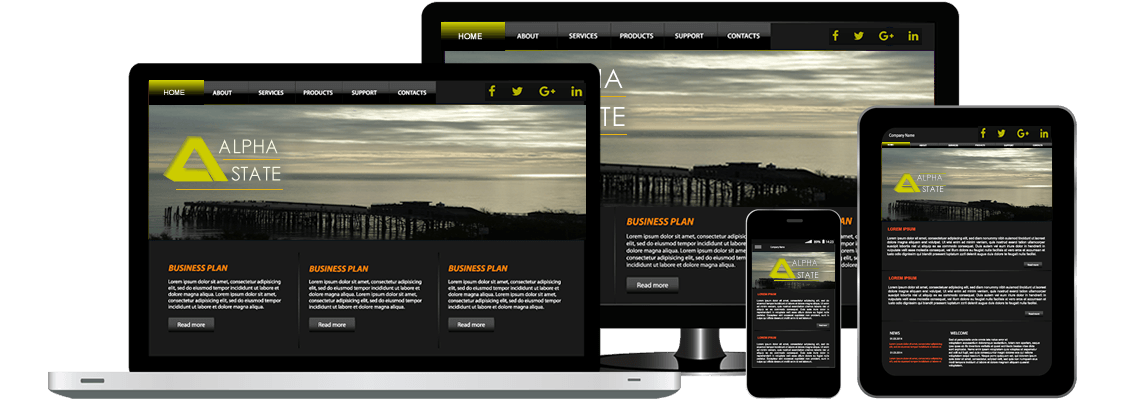
At Alpha State Web Design & Development our four core service areas Website Design & Development, Domain Names, Hosting & Online Marketing combine into complete integrated solutions for our clients.
Our range of services can be 'picked & mixed' to suit individual needs, so please don't hesitate to contact us to discuss your particular requirements.
Our abilities & experience in integrating & managing the above for a wide range of clients, means you can confidently rely on us as a 'one-stop-shop', leaving you to focus on other aspects of your business.
Contact usWe have over a decade of experience creating websites ranging from simple brochure sites to e-commerce & larger more complex sites. More Info
For some clients the search engine optimisation (SEO) work carried out when planning the generation & organisation of the content & coding of the site is enough to achieve a healthy volume of enquiries. More Info
Adopting the right approach to researching & identifying the best domain name options can prove enormously beneficial in the long run. We can liaise with you to research these best options then register & managing the domain on your behalf. More Info
Our hosting packages are configured to provide you the peace of mind of knowing your website is hosted on a server with high levels of security, speed and reliability. More Info
Contact us & we'll develop a proposal for getting a web site working for your business. While we operate from Hastings we have clients around the world & we are happy to visit you as required to discuss your requirements & ideas.
Feel free to browse our Toolbox resources for 'website design & development' & 'online marketing', where we explain many of the key principles of developing your business online.
Our portfolio showcases a collection of websites we've created for clients over the past decade.
If you would like to receive occasional news about online marketing, legislation, Alpha State or anything else relevant to web management then sign up to our mailing list. Its easy to subscribe or unsubscribe.
